



A tooth extraction is a dental procedure that removes a tooth from its socket when it can’t be saved or repaired. We numb the area first, so you feel pressure but not pain. Simple extractions take a short visit, and gums typically heal within one to two weeks. For tooth extraction in Yardley, PA, call (215) 504-2400.
Key Takeaways
Your dentist studies the X-ray, pauses, and says the words nobody wants to hear: this tooth can’t be saved. Your stomach drops. How bad will it be? How long will you be sore? And what happens to the gap afterward?
Those are fair questions, and we hear them from patients all the time. Here’s the reassuring part. A planned extraction is usually calmer than people expect. It’s numbed, it’s methodical, and you’ll know the plan before we begin.
This guide walks through tooth extractions in Yardley, PA from the first conversation to the last day of healing, including what to do about the empty space. If you’re in severe pain or have swelling right now, start with our emergency dentistry page instead. Otherwise, read on, and the appointment will feel a lot less like a mystery.
A tooth extraction is the removal of a tooth from the bone socket that holds it. Dentists recommend it when a tooth is too damaged, infected, or loose to repair, or when removal protects your other teeth and gums. A simple extraction removes a visible tooth, while a surgical extraction handles teeth that are broken at the gum line or hard to reach. Both are done with the area numbed.
Nobody wants to lose a natural tooth, and dentists don’t suggest it lightly. Saving the tooth is almost always the first goal. Still, sometimes the damage runs too deep. Picture a Langhorne patient with a cracked molar. If the crack travels below the gum line, a crown has nothing solid to hold onto.
Common reasons include:
Usually, yes. Dentists try to save a natural tooth first with a filling, root canal, or crown. Extraction becomes the better choice when the tooth can’t be repaired, keeps causing infection, or threatens nearby teeth and bone. In some orthodontic plans, removing a tooth also creates space. Your dentist will explain the reasons and the alternatives before recommending removal.
Not every extraction looks the same. A Newtown patient with a fully visible tooth and a patient whose tooth snapped off at the gum line need different approaches, even though both end with the tooth removed.
| Simple Extraction | Surgical Extraction | |
| When it applies | The tooth is visible above the gum | The tooth is broken at the gum line, has curved roots, or is hard to reach |
| How it’s done | The tooth is loosened and lifted out | A small opening is made in the gum, and the tooth may be sectioned |
| Numbing | Used | Used |
| Stitches | Rarely needed | Sometimes needed |
| Healing feel | Often milder soreness | Often more swelling and soreness |
Your imaging tells us which category your tooth falls into. If a case is complex, we’ll tell you plainly and talk through your options, including referral to a specialist when that’s the better choice for you.
A little preparation makes the day smoother. A Lower Makefield patient who arrives with a medication list and a fridge full of soft foods is already ahead of the game.
Before your visit:
One firm rule: never stop a prescribed medication on your own. If something needs to change, we’ll coordinate with your doctor.
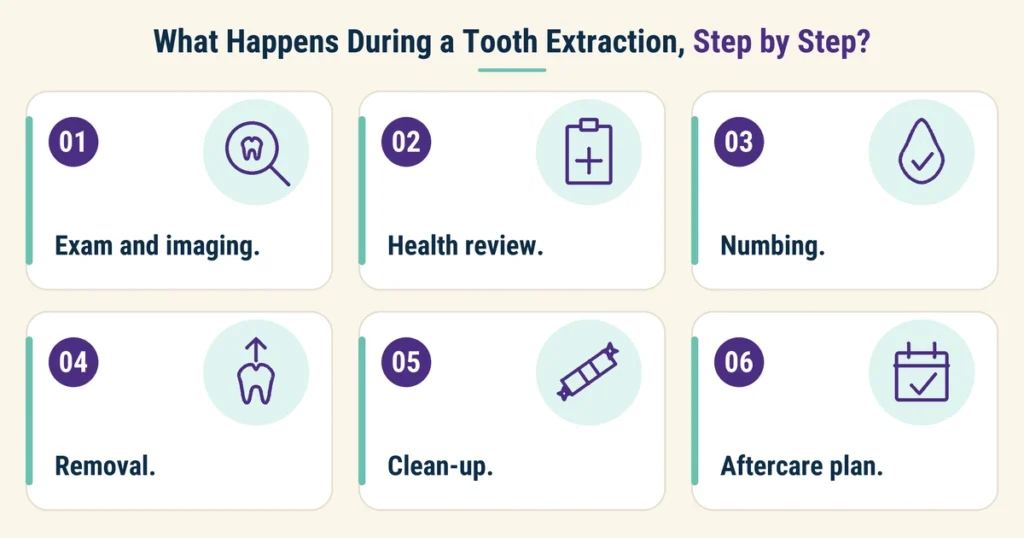
Here’s the sequence most patients experience, from the first look to the walk out the door. A Morrisville patient once described the unknown as the scariest part, so we explain each step as we go.
A simple extraction is often one of the shorter procedures in a dental visit, though total appointment time includes numbing and instructions. Surgical extractions take longer because the tooth may need to be sectioned. We can give you a realistic estimate after reviewing your imaging, since root shape and tooth position change the timing.
Let’s Talk Strategy: Not sure whether your tooth can be saved, or whether it needs to come out? Book a visit and we’ll review your imaging together, explain your options in plain language, and answer your questions before any decision is made. |
You shouldn’t feel sharp pain during the procedure, because the area is numbed first. You’ll likely feel pressure, pulling, or movement, which is normal. If anything feels sharp, tell us right away and we’ll adjust. Soreness afterward is common once the numbness fades, and your aftercare instructions explain how to manage it. Feasterville patients who feel anxious often find our tips for easing dental anxiety helpful before the visit.
Healing follows a fairly predictable pattern, though everyone moves at a different pace. A Levittown patient with a simple extraction will often feel different from one who had a surgical case, so treat this as a general guide. Your dentist’s instructions always come first.
| Timeframe | What to Expect | What Helps |
| First 24 hours | Bleeding slows, numbness fades, soreness begins | Bite on gauze as directed, rest, use a cold compress on the outside of your cheek |
| Days 2 to 3 | Swelling and soreness often peak, then ease | Soft foods, gentle care, medication exactly as directed |
| First week | Discomfort keeps fading | Add foods back gradually, keep cleaning your other teeth |
| One to two weeks | Gum tissue typically closes over the site | Stay gentle around the area |
During the first day, skip these:
Start with cool or lukewarm soft foods, then add textures back as the site feels comfortable. Chew on the opposite side and avoid crunchy, sticky, spicy, or very hot foods until your dentist says they’re fine. Timing varies with the type of extraction and how you heal, so use comfort as your guide and ask us if you’re unsure.
The main thing you’re protecting is the blood clot in the socket. According to the American Dental Association, dry socket happens when that clot is displaced, leaving bone and nerves exposed, and you should notify your dentist if it happens. The ADA also notes that tobacco can delay healing, so read the ADA’s dry socket guidance if you want the details.
Related Reading: Wondering whether a root canal could save your tooth instead?
Our guide explains what happens during the procedure, so you can compare both paths before you decide. See what happens during a root canal
Most healing is uneventful, but a few signs mean you should call rather than wait. A Southampton patient who feels worse on day four instead of better shouldn’t tough it out.
Call us if you notice:
If swelling affects your breathing or swallowing, call 911 or go to the ER. For anything else, call (215) 504-2400, or see our emergency dentistry page if you need quick help.
Here’s something people don’t expect. The extraction is often the easy part, and the gap needs a plan. Without one, neighboring teeth can drift into the space, the opposing tooth can shift, and chewing may get harder. Read more about why replacing missing teeth matters.
A Bensalem patient weighing choices will usually look at three paths:
| Option | How It Works | Worth Asking About |
| Dental implant | A post placed in the jaw supports a replacement tooth | Treatment timeline and bone health |
| Dental bridge | A replacement tooth is anchored to the teeth beside the gap | Whether neighboring teeth are healthy enough |
| Partial denture | A removable appliance fills one or more gaps | Fit, comfort, and daily care |
Replacing several teeth is a different conversation. Our posts on dental implants vs dentures and implant supported dentures cover those choices in depth.
Related Service: Planning to replace the tooth you’re about to lose?
Ask us about timing before the extraction, so your replacement plan is ready when you are.
Explore dental implants
Patients across Bucks County tell us they want someone who explains the plan, answers questions, and never rushes them. Our office is built around one-on-one time with the doctor and hygienists, not a high-volume schedule, and we use 3D imaging so we can see roots, bone, and nearby structures before we begin. Our practice holds a 4.9 out of 5 rating across more than 400 Google reviews.
For ongoing care once you’ve healed, we also offer family dentistry to patients from Yardley, Newtown, and the surrounding communities.
A tooth extraction sounds bigger than it usually is. You’ll be numbed, you’ll know each step, and you’ll leave with a plan for healing and for the empty space.
What matters most? Asking questions early, protecting the blood clot during the first day, and not ignoring the gap afterward. Do those three things and you’ll have set yourself up for a smooth recovery.
Here’s your next step. If a dentist has told you a tooth can’t be saved, or you’re not sure whether it can, don’t sit on it. Whether you’re in Yardley or anywhere across Bucks County, we’re happy to take a look and talk it through. Call (215) 504-2400 or book an appointment today.
Yes. We evaluate the tooth with imaging, explain whether it can be saved, and remove it when extraction is the best option. The area is numbed before we begin, and you’ll get clear aftercare instructions. We also talk through how to replace the tooth. If your case needs a specialist, we’ll tell you plainly and explain your options. Call (215) 504-2400 to book.
Cost depends on whether the extraction is simple or surgical, how complex the tooth is, and what your insurance covers. Imaging, numbing, and follow-up care may also factor in. We review your estimate and coverage before treatment, so there are no surprises. You can read general coverage details on our insurance page, then call us with your plan information.
Most soreness and swelling eases within the first few days, and gum tissue typically closes over within one to two weeks. Bone under the gum keeps remodeling for months, though you won’t feel that. Healing varies with the tooth, the type of extraction, and your health. Follow your dentist’s instructions, and call if pain worsens instead of improving.
Plan to rest on the first day and avoid strenuous exercise, since it can increase bleeding or swelling. Your dentist will tell you when you can return to normal activity, and that depends on whether your extraction was simple or surgical. If your job is physically demanding, mention it at your visit so we can plan around it.
Often, yes. A filling, root canal, or crown can save many damaged teeth. Extraction makes sense when the damage is too deep, the tooth keeps getting infected, or gum disease has weakened its support. We’ll show you your imaging, explain what saving the tooth would involve, and let you compare both paths before you decide.
In most cases, it’s worth discussing. Neighboring teeth can drift into the gap, the opposing tooth can shift, and chewing may become harder. Options include a dental implant, a bridge, or a partial denture. Not every gap needs the same fix, so we’ll go over which choice fits your mouth, your health, and your goals.
Yes. Patients come to us from Langhorne, Newtown, Morrisville, Levittown, Bensalem, and communities across Bucks County. If you’re deciding whether our Yardley office is convenient for you, call (215) 504-2400 and we’ll answer your questions about the visit, the timing, and what to bring.
Call (215) 504-2400 or book an appointment online, and tell us what’s going on with the tooth. Bring a list of your medications and any recent X-rays if you have them. If you have severe pain or facial swelling, say so when you call, and we’ll help you decide how quickly you need to be seen.
"My mission is to always provide extraordinary dental care in a compassionate setting. At Yardley Dental Arts, quality is key! We are NOT a high volume, high turnover office. We are patient centric office. Our practice model allows for concierge service and exclusive one on one time with the doctor and the hygienists. We pride ourselves on using premier materials, labs and the latest in dental technology including our GREEN CT 3D SCANNER, delivering high quality images at a fraction of the radiation as compared to the standard. This allows for fully customized treatment plans focusing on your specific needs and comfort level.
It’s a pleasure to serve you and your family for your comprehensive dental needs. Every one of us is passionate about what we do, and it shows! I look forward to meeting you."
